
The Most Dangerous Thing in the Field Isn’t the Terrain. It’s the Operator.

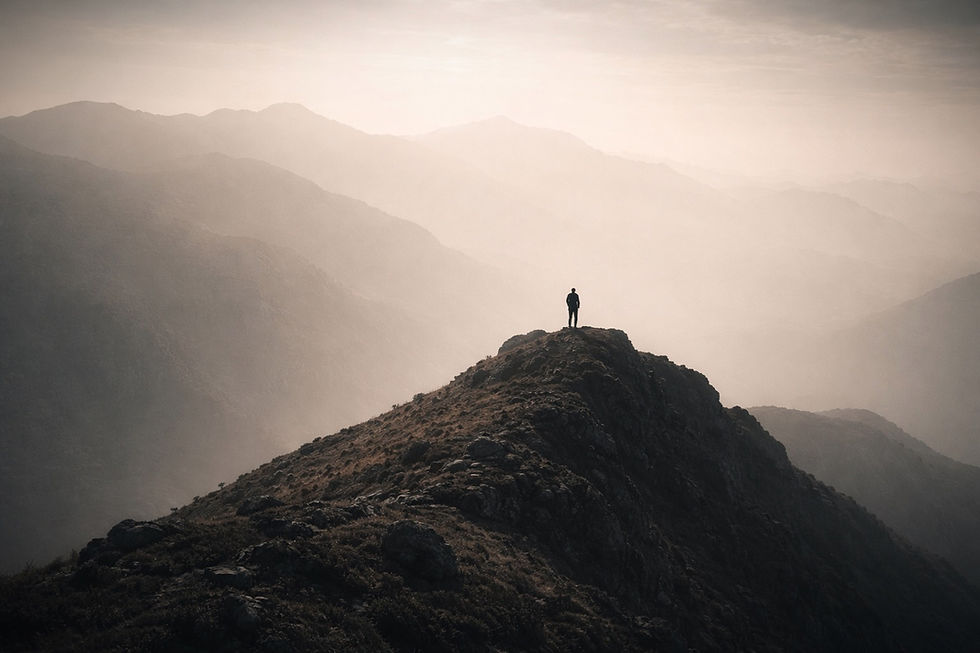
Bear Grylls once observed that the most dangerous thing in the wilderness isn’t a snake, a spider, or a crocodile.
It’s ego.
That single insight travels far beyond survival shows. It applies with equal force to aviation, heavy construction, drone operations, and any domain where humans must continually read and respect terrain.
Because the greatest failures almost never start with the environment.
They start with a quiet loss of humility toward it.
Terrain Does Not Negotiate
Pilots learn this lesson early and often.
Mountains do not move for a schedule.
Weather does not clear because a plan requires it.
Fuel does not stretch because a pilot believes it should.
The environment is immovable, indifferent, and absolute. The moment an operator begins to substitute experience or confidence for disciplined, ongoing observation, the risk profile shifts—not with drama, but with a subtle, almost imperceptible drift.
The First Warning Sign Is Almost Always Internal
When an operation is quietly sliding toward failure, the signals are rarely loud. They usually appear as small, internal reframes:
“We’ve done this before.”
“That won’t be a problem.”
“We don’t need to double-check.”
The terrain has not changed.
The operator’s relationship to it has.
And that is where most accidents are born.
The Pattern Repeats in Construction
Construction doesn’t happen in wilderness, but it still unfolds inside evolving operational terrain: perimeter conditions, adjacent infrastructure, access points, sightlines from off-site, drainage paths, third-party interfaces.
These elements shift gradually, often invisibly, as the project progresses. When teams grow comfortable, they begin to treat yesterday’s conditions as today’s reality. That untested assumption sits quietly until something—weather, a neighbor, a regulator, or physics—exposes it.
Ego Disguises Itself as Confidence Without Curiosity
Ego rarely announces itself as arrogance. More often it shows up as relaxed certainty:
Teams stop asking the simple, relentless questions:
What has changed since last week?
What can outsiders now see that we can’t?
Which assumptions are we carrying forward on autopilot?
What part of the site have we stopped truly seeing?
The environment keeps evolving.
Observation stops.
Humility Is a Practical Discipline, Not a Virtue Signal
In high-stakes environments, humility is not philosophical—it is operational.
It means maintaining a deliberate posture of continuous, skeptical observation.
Pilots scan instruments and horizon with ritual discipline.
Survivalists read wind, water, and ground like a daily language.
The best field teams periodically step back from the work, look at the site as if for the first time, and ask:
“What does this look like right now?”
The instant we assume we already know the answer is usually the instant the environment begins to teach us—often at a cost.
The Environment Always Casts the Final Vote
In the wilderness, ignoring terrain can kill you in minutes.
In aviation, it can end a flight in seconds.
In construction, the consequences usually unfold more slowly: a dispute, a regulatory violation, a safety incident, a third-party complaint, or a condition that no one documented when it first appeared.
But the root cause is almost never the terrain itself.
It is the moment someone stopped paying close attention to it.
The Quiet Advantage
The most consistently effective operators—whether in cockpits, on ridgelines, or on job sites—share one unmistakable trait.
They respect the environment more than they trust their own assumptions.
They keep observing even when everything appears fine.
They maintain active humility toward the terrain.
Because they have internalized a simple, hard-earned truth:
The environment does not surprise careful observers.
It only surprises the confident ones.
THE FLYING LIZARD
Where People and Data Take Flight
The world isn’t flat—and neither should your maps be.™


Comments