
Construction Changes a Site Twice

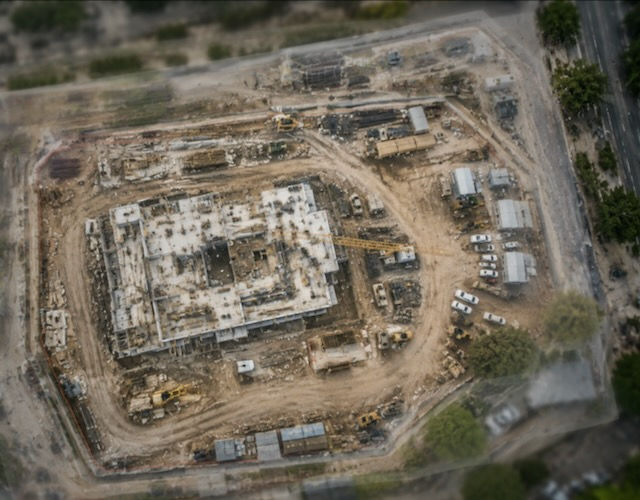
Most people think construction changes a site only once. A fence moves. A haul route appears. Materials get staged. Temporary facilities are installed. Utilities are exposed. Equipment arrives. These physical changes are obvious because they can be seen. They form the daily rhythm of construction, and everyone expects a project site to evolve as work progresses.
But construction actually changes a site a second time as well — and this change is informational. It happens when people’s understanding of the site begins to drift away from the site itself. A superintendent walks the project every day and maintains a current grasp of conditions. A project manager might be working from photographs taken two weeks earlier. A safety manager may have visited last month. An owner’s representative might only see the site during scheduled meetings. Meanwhile, a stakeholder reviewing progress from an office could hold an entirely different picture in mind.
None of these people are wrong. They are simply operating from different versions of the same project. At first, the differences are small: a temporary access point is relocated, a staging area expands, materials are moved to support a new phase, equipment is repositioned, or a perimeter condition changes. Each individual shift seems insignificant. Yet over time, these changes accumulate. Weeks later, the site may look substantially different from the version still carried in people’s minds.
This is where an important challenge emerges. Most project risks do not arise because people are careless or inattentive. More often, they develop because site conditions change faster than shared understanding can keep up. One team works from today’s reality while another operates from last month’s snapshot. Both believe they understand the project. Both may be acting on accurate information from the moment they received it. The problem is that the site kept changing after that point.
As projects grow in size and complexity, maintaining a common understanding becomes increasingly difficult. More people get involved, more decisions are made, more temporary conditions appear, and more transitions occur between phases of work. The physical project evolves continuously. Shared understanding, by contrast, advances in irregular jumps through meetings, reports, site walks, photographs, phone calls, and casual conversations. Sometimes those two timelines stay aligned. Sometimes they diverge.
When they do diverge, the consequences are often subtle rather than dramatic. A conversation takes longer because two people are discussing different versions of the site. A decision is delayed while someone verifies a current condition. A question arises about when something changed. A stakeholder suddenly realizes their mental picture no longer matches reality. Most of these situations never escalate into claims, disputes, or safety incidents, but they all stem from the same root cause: the informational version of the project has fallen behind the physical one.
This is why visibility matters — not because teams lack information (modern construction projects generate enormous amounts of it), but because the real challenge is maintaining a shared understanding of a constantly changing environment over time. The site keeps changing whether anyone documents it or not. The real question is whether everyone responsible for the project can see those changes clearly enough to stay aligned.
Construction changes a site twice: first physically, then informationally.
The second change is often the one that matters most.
THE FLYING LIZARD®
Aviation-Driven Drone Intelligence™
Where People and Data Take Flight™


Comments