
An Aircraft Changes. Its Record Shouldn't.

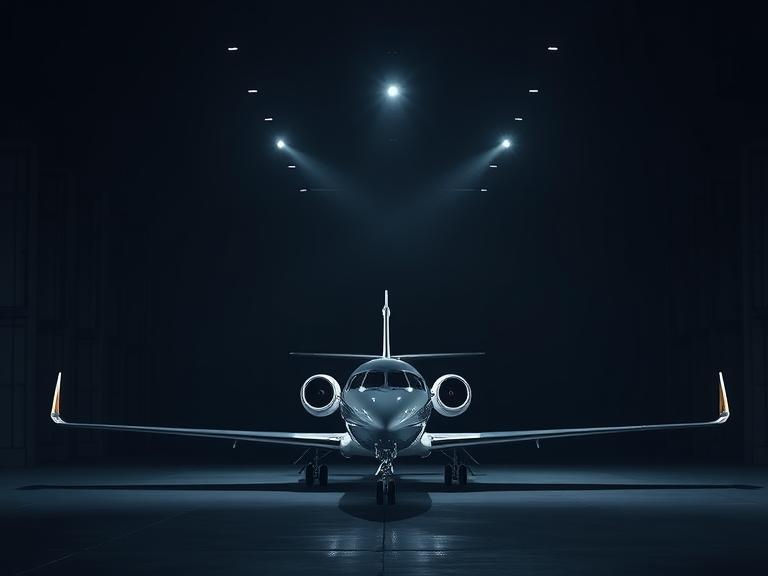
An aircraft can spend decades in service.
During that time, paint changes. Fairings are removed and replaced. Fasteners are disturbed. Repairs are made. Damage appears. Components are changed. The airplane moves between owners, mechanics, hangars, and sometimes entirely different parts of the country.
Its records travel with it.
But those records rarely preserve exactly what the aircraft looked like at a particular moment in time.
Logbooks document maintenance. Photographs capture individual areas. Inspection reports describe findings. Each serves an important purpose. But none necessarily creates a complete visual record of the aircraft as it physically existed on a particular day.
That is where 3D aircraft documentation becomes interesting.
A Moment That Can Be Revisited
A detailed 3D model allows someone to return visually to an aircraft long after the original capture occurred.
Not metaphorically. You can move around the aircraft, examine visible surfaces from different perspectives, and revisit areas that may not have seemed particularly important when the imagery was collected.
That distinction matters because we rarely know which piece of information will become important later.
A photograph is normally taken because someone has already decided what they want to photograph. A 3D capture approaches the problem differently. The objective is to document as much of the visible exterior condition as practical so that questions can be asked of that record later.
It does not replace an inspection.
It preserves context.
Before Something Changes
Consider an aircraft entering maintenance.
Photographs may be taken of a damaged area or a particular component, but the aircraft itself is about to change. Panels may come off. Components may be removed. Repairs may alter visible conditions. Once that work begins, the exact pre-maintenance condition no longer exists.
A 3D model captured beforehand can preserve a broader visual baseline.
The same principle could apply before and after significant maintenance, at the beginning or end of a lease, during an aircraft sale, following a damage event, or whenever preserving the visible condition of the aircraft has value.
The usefulness isn't necessarily in discovering something nobody else could see.
It is in being able to return to what was visible before it changed.
Documentation Without Pretending It's Inspection
There is an important boundary here.
A photogrammetric model is not an aircraft inspection. It does not determine airworthiness. It cannot see through structures, measure every defect, or replace the judgment of an appropriately qualified mechanic or inspector.
What it can do is give those people another form of information.
A mechanic looking at a model remotely may be able to understand the location and surrounding context of a visible condition before seeing the aircraft personally. An owner may be able to revisit the exterior condition documented months earlier. Someone evaluating a later change may have a visual baseline against which the current aircraft can be compared.
The model doesn't make the judgment.
It gives the person making the judgment more context.
Aircraft Have Histories. Most of Them Aren't Visual.
Aviation is exceptionally good at preserving records.
An aircraft that is several decades old may have logbooks documenting an extraordinary amount of its mechanical history. Yet reconstructing exactly what that aircraft looked like at a particular point in that history can be surprisingly difficult.
That is what makes 3D documentation different from simply taking more photographs.
A collection of photographs records views.
A well-constructed 3D model records spatial relationships between those views and creates something that can be explored later.
The value of that record may be obvious on the day it is created.
Or it may not become apparent until years afterward.
The Question Isn't Whether Every Aircraft Needs a Digital Twin
Maybe they don't.
Technology doesn't become useful simply because it is possible, and aviation has plenty of good reasons to be skeptical of solutions looking for problems.
The better question is where preserving a detailed visual record of an aircraft creates enough value to justify creating one.
For some aircraft and some situations, the answer may be nowhere.
For others—maintenance documentation, ownership transitions, insurance records, restoration projects, damage documentation, historically significant aircraft, or simply establishing a visual baseline—the answer may be considerably different.
That is something worth exploring rather than declaring inevitable.
Preserve What Exists Before It Doesn't
Aircraft change.
Most changes are ordinary. Some are intentional. Occasionally, one becomes important only after the fact.
By then, yesterday's aircraft is gone.
A 3D model cannot tell us everything about what happened to an airplane. But it can preserve something traditional records often cannot: a navigable visual representation of what was actually visible at a particular moment in its history.
And sometimes the value of a record isn't knowing why you'll need it.
It's having it when you do.
THE FLYING LIZARD®
Aviation-Driven Drone Intelligence™
Where People and Data Take Flight™


Comments